STIMMUNGEN, 2020
microtonal music for zither
-
text
STIMMUNGEN
Martin Mallaun – Zither
For many years I’ve enjoyed the beauty of microtonal tunings. A major turning point came when I played in an opera by Georg Friedrich Haas that departs from standard tuning systems, being almost entirely composed in overtone series. For several months I was totally immersed in a utopia of pure sounds and the dramatic tension they create, which fundamentally changed the way I listen. Since then I’ve focused on experimenting with different types of alternate tunings on the zither. STIMMUNGEN combines important stages of this journey: new compositions in sophisticated scordatura that give my instrument a brand-new and distinctive sound and Renaissance music played in meantone temperament for the first time on a zither.
tracklist
» Bernhard Lang (*1957) 01 Differenz/Wiederholung 10a
Für E-Zither und Loop-Generator, 200213:54 » John Dowland (1563–1626) 02 A Fantasie 04:07 03 The Frog Galliard 02:04 04 The King of Denmark’s Galliard 02:55 » William Dougherty (*1988) 05 Traum im Traum
Für Mitteltönige Zither und Sinustöne, 201609:34 » Jan Pieterszoon Sweelinck (1562–1621) 06 Psalm 5 01:16 07 Psalm 23 a 01:48 08 Psalm 23 b 01:56 09 Courante 01:40 » Marco Döttlinger (*1984) 10. graben/wischen/Feder
Für E-Zither, 201709:33 -
audio
-
Bernhard Lang (*1957)
01 Differenz/Wiederholung 10a -
John Dowland (1563–1626)
03 The Frog Galliard -
William Dougherty (*1988)
05 Traum im Traum -
Jan Pieterszoon Sweelinck (1562–1621)
06 Psalm 5
-
Bernhard Lang (*1957)
-
order
E-Mail: Martin.Mallaun [at] gmail.com
price: 18€ excluding shipping costs
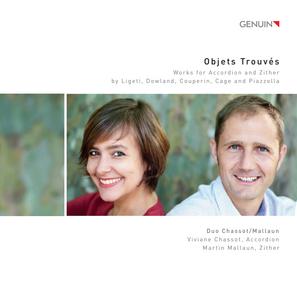
Objets Trouvés, 2016
-
text
Objets Trouvés
Viviane Chassot – Accordion
Martin Mallaun – ZitherSchwetzingen Rococo Theater, May 2013. Musicians are rehearsing in the orchestra pit for the world premiere of an opera by Georg Friedrich Haas. Sitting between a harpsichord and Thai gongs, an accordionist and zither player with microtonally tuned zithers are playing beside each other – a memorable location for our first meeting!
Inspired by our instruments’ unusual blend of sounds, we soon decided to continue working together after the end of the opera project. No simple undertaking, since off the beaten track, hardly any repertoire exists for accordion and zither. This only motivated us further to set out with the two instruments into uncharted territory. Our aim was to offer new interpretations of works by composers who had a special influence on us personally, and to create our own sound.
So we devoted months of research and rehearsals to exploring the depths of European musical history. We followed in the footsteps of Merry Melancholy in the English Renaissance and sought out the intractable hurdy-gurdy in the elegance of French baroque music. We had discussions about John Cage and Zen, improvised on tangos by Astor Piazzolla, and found folk music roots in the works of György Ligeti.
We are presenting the essence of all these objets trouvés, music from the last 400 years, on this CD.track list
» György Ligeti (1923-2006) 01 Musica ricercata VIII 01:08 02 Musica ricercata I 02:44 » John Dowland (1563-1626) 03 Lachrimae Antiquae 04:25 04 The King of Denmark’s Galliard 02:55 05 Preludium 01:09 06 Lachrimæ Verae 04:29 07 M. Giles Hobie’s Galliard 01:40 » François Couperin (1668-1733) 08 Muséte de Choisi and Muséte de Taverni 05:19 09 La Julliet 02:03 » John Cage (1912-1992) 10 Chess Pieces 09:12 » Astor Piazzolla (1921-1992) 11 Libertango 04:41 12 Adiós Nonino 04:23 13 Novitango 04:12 » György Ligeti 14 Musica ricercata VII 04:01 15 Musica ricercata IV 02:47 16 Musica ricercata III 01:16 -
audio
-
György Ligeti (1923-2006)
Musica ricercata VIII -
John Dowland (1563-1626)
Lachrimae Verae -
François Couperin (1668-1733)
La Julliet -
Astor Piazzolla (1921-1992)
Libertango -
György Ligeti (1923-2006)
Musica ricercata III
-
György Ligeti (1923-2006)
-
order
The CD is available from your dealer:
label: GENUIN
or via E-Mail: Martin.Mallaun [at] gmail.com
price: 18,90 € - no shipping costs! -
nominated for
Preis der deutschen Schallplattenkritik 4/2016

GREIFER, 2012
new music for three zithers
-
reviews
Neue Zeitschrift für Musik, November 2012 Das Trio Greifer entwirft die Vision einer neuen Klangwelt der Zither auf so vielfältige, schlüssige und überzeugende Weise, dass man sich fragt, warum es bestimmte Vorbehalte eigentlich überhaupt jemals gegeben hat. Am Instrument kann es nicht gelegen haben.
Christoph Wagner
http://www.musikderzeit.de/de_DE/news/newp/show,35265.html
crowwithnomouth Internetblog von Jesse Goin, 04.12.2012 Whatever niche the trio occupy, their musicianship is superb. Hurt, Gamper and Mallaun all compose and perform in various contexts, participate in many ensembles, and are clearly steeped in Weiss and Dowland, as well as contemporaneous composers. Their mutinous energy might struggle to continue finding commissions from the academic realm, perhaps leading them to open-ended works with a greater latitude for improvisation. Whatever the case, Greifer are making vital music, and with any luck at all, will receive invitations to be heard where genuinely adventurous listeners gather.
Jesse Goin
http://crowwithnomouth-jesse.blogspot.co.at/2012/12/to-pool-their-mutinous-energy.html
Falter, 12.9.2012 Greifer entlocken dem Instrument ganz neue Töne: dichte Cluster, sirrende Tremoli, wuchtige Schläge. Und wer hätte gedacht, dass man zu Zithermusik sogar headbangen kann?
Miriam Damev
http://www.falter.at/web/shop/detail.php?id=37647
SKUG, 24.09.2012 Großartig die Auswahl der Stücke, famos die Umsetzung, variantenreich und ebenso überraschend der Hörgenuss. Großes (Zithern-)kino für die Ohren wird hier geboten, ein Leckerbissen!
Curt Cuisine
http://www.skug.at/article6552.htm
www.mica.at, 02.08.2012 -
text
Striking New Chords
A new era is dawning for the zither. Outrageous sounds are digging their way to your ears, and it pays off to listen: Restrained and sometimes hesitant but also rough and rugged; surprising and beyond comparison. Patiently, and for quite a while, several ladies and gentlemen of the distinguished guild of composers (as if it existed!) have burrowed into this stringy instrument, have tracked its qualities, its vibrancy, its jangling, rumbling, trembling and other sometimes “naughty” utterances and have made all of them subservient to their will.
Concealed behind this full array of new sounds, something lurks and hides: the ambiguous, incendiary sonority. Three courageous performers have agreed to assist in its (instrumental) delivery: Reinhilde Gamper, Leopold Hurt and Martin Mallaun.
Resonance: that’s what seems to steadily and soundly bridge the gaps between all those filigree, fierce, ferocious, vulnerable, volatile, even harsh sounding events. Creativity and novel constellations - be it microintervals or dense clusters, buzzing tremolos or massive blows to the strings – the search itself begets unforeseen trails and visions. (Auditory) passages give way to avant-garde regions of stunning quality. New gates have opened to invite further creative impulses and suggestions. No longer is there any need to worry about the future prospects of the zither as a well-established instrument in contemporary music.
Wolfgang Praxmarer (translation: Lea Rennert)
track list
» Manuela Kerer (*1980) solitudine vaga, 2009 01 spavalda 02:10 02 perpetua 01:12 03 immobile 02:02 04 invivibile 02:38 05 mirabile 00:42 » Burkhard Stangl (*1960) Mellow (My Feldman), 2011 06 Part I 09:35 07 Part II 10:61 » Burkhard Friedrich (*1962) (D)evil song, 2011 08 13:48 » Helga Pogatschar (*1966) underground surround, 2001 09 18:37 -
audio
-
Manuela Kerer (*1980)
solitudine vaga, 2009
spavalda -
Burkhard Stangl (*1960)
Mellow (My Feldman), 2011
Part I -
Burkhard Friedrich (*1962)
(D)evil song, 2011 -
Helga Pogatschar (*1966)
underground surround, 2001
-
Manuela Kerer (*1980)
-
order
The CD is available from your dealer:
label: Idyllic Noise
distribution: Lotus Records
or via E-Mail: Martin.Mallaun [at] gmail.com
price: 18€ excluding shipping costs
OMONÉRO, 2010
New Music for the Zither
-
reviews
Freistil #43 Martin Mallauns Album “Omonéro, Neue Musik für Zither” ist wirklich hörenswert. Diese Veröffentlichung beinhaltet fünf komponierte Stücke, in welchen unterschiedlichste Klangmöglichkeiten des Instruments ausgelotet werden. Das erste Stück “Logbuch” stammt von Leopold Hurt. Es eröffnet dem Hörer einen guten Einstieg in den klanglichen Kosmos der Zither. Hurt entwickelte dieses Stück anhand von Improvisationen. Der Umgang mit unterschiedlichen Spieltechniken auf der Zither wie Wischen, Tapping, Klopfen, Schlagen, etc. steht hier im Mittelpunkt. Dieter Schnebels Komposition “Sammelsurium” umfasst neun Miniaturen. Die Untertitel der einzelnen Stücke geben dabei das musikalische Geschehen vor. Ein herausragendes Stück stellt wohl Franz Hautzingers “Kleine Göttermusik” dar. Sie berührt durch ihre Einfachheit und Schlichtheit, was Mallaun sehr stimmig umsetzt. Auch hier sind es kurze Miniaturen, bestehend aus schwebenden Melodien, in sich ruhend, aber von großer Schönheit. Manuela Kerers Stück “Impresa Omonéro” bietet Mallaun ein weites Feld, um mit schmutzigen, perkussiven Sounds zu spielen. Zu guter letzt beinhaltet die CD eine Komposition von Georg Friedrich Haas, “Ein Saitenspiel für umgestimmte Diskantzither”, ein expressives Stück, welches im Sinne der Haaschen Klangästhetik mit Stimmungen und Intensitäten spielt.
Katrin Hauk
Neue Musikzeitung, 07/2011
Neue Musikzeitung, 07/2011
Neue Zeitschrift für Musik, 05/2010
MICA (music information center austria)
Falter, 14.07.2010
Tiroler Tageszeitung, 01.06.2010
Diverse Zeitschriften -
text
OMONÉRO - New Music for the Zither
On the periphery of the performing arts — on the fraying edge, if one will — wondrous discoveries can be made. Not long ago, it looked as if the zither would forever remain a captive of its own stereotype. And yet, the instrument has recently experienced an astonishing Renaissance, especially in the area of contemporary music. The scope of sounds available on the zither is seemingly inexhaustible. The instrument commands a range of 5 ½ octaves, with five strings over a fretboard and 34 open strings.
This rise in popularity may be attributed not only to a young generation of interpreters, but also to the successful efforts of zither craftsmen to modify the instrument to meet the demands of contemporary music. Perhaps the most important factor, however, has been a new, unorthodox approach to the instrument by composers, freeing it from its traditional role as an elicitor of nostalgic yearnings. From feeble beginnings in the 1970s (with works, for ex., by Mauricio Kagel and Walter Zimmermann), the zither movement has gained new impetus. We now have works for zither by such composer prominence as Bernhard Lang, Olga Neuwirth, Dieter Schnebel and Georg Friedrich Haas.
The compositions available on this CD represent five very different approaches to the zither: Leopold Hurt’s LOGBUCH developed out of improvisations; SAMMELSURIUM, by Dieter Schnebel, is post-serial music; introspective tracings and reflections characterize KLEINE GÖTTERMUSIK by Franz Hautzinger; Manuela Kerer’s subtly funny IMPRESA OMONÉRO is innovative and zestful; and Georg Friedrich Haas’s EIN SAITENSPIEL reflects his microtonal sound cosmos.
track list
» Leopold Hurt (*1979) LOGBUCH (Hommage à K.V.), 2007 01 Erster Eintrag 03:35 02 Zweiter Eintrag 04:22 03 Dritter Eintrag 03:41 » Dieter Schnebel (*1930) Sammelsurium, 2006 04 wie? 01:13 05 Auf! 01:26 06 so oder so 01:40 07 vielleicht... 00:55 08 ja! ja! ja! 00:37 09 nein, nein... oder? 01:08 10 und doch! 01:29 11 nach und nach 02:06 12 nochmals 00:42 » Franz Hautzinger (*1963) kleine Göttermusik, 2009 13 Göttertisch 02:35 14 Göttertrank 02:58 15 Götterspeise 01:12 16 Godess 01:43 17 Goldstaub 01:37 18 Göttertisch II 00:46 19 Göttertisch 01:23 » Manuela Kerer (*1980) Impresa Omonéro, 2009 20 Gedanken (ver)MISCHEN 00:38 21 Austeilen haal 01:19 22 Ziehen hinterfotzig 03:09 23 Paare ablegen hinterrux 00:59 24 Farbe bekennen fregiert 02:35 25 HETSCHEPETSCH Strof 01:01 » Georg Friedrich Haas (*1953) 2001 26 Ein Saitenspiel für umgestimmte Diskantzither 09:08 Instrumente: Altzither Klemens Kleitsch 2003: 1.-3. Diskantzither Klemens Kleitsch 2007: 4.-11., 13.-19., 20.-25. Diskantzither Ulrike Meinel 2003: 26. -
audio
-
Leopold Hurt (*1979)
LOGBUCH (Hommage à K.V.), 2007
Erster Eintrag -
Dieter Schnebel (*1930)
Sammelsurium, 2006
und doch! -
Franz Hautzinger (*1963)
kleine Göttermusik, 2009
Göttertisch I -
Manuela Kerer (*1980)
Impresa Omonéro, 2009
Gedanken (ver)MISCHEN -
Georg Friedrich Haas (*1953)
Ein Saitenspiel
Sample 2: Ende
-
Leopold Hurt (*1979)
-
order
The CD is available via E-Mail: Martin.Mallaun [at] gmail.com
price: 18€ excluding shipping costs -
selected for the
Austrian Music Box12
zwischen steinen, 2005
Baroque lute music
and contemporary New Music for the Zither
-
text
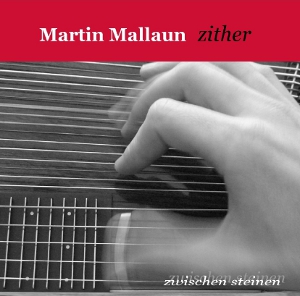
zwischen steinen
Martin Mallaun - zither
Martin Mallaun’s solo debut album zwischen steinen contrasts the magnificent compositions of Silvius Leopold Weiss, lutenist to the king, with music of our time.
Born in Breslau, Silvius Leopold Weiss (1686–1750) learned the art of lute playing from his father Johann Jacob Weiss. After a stint in the Düsseldorf court orchestra and some years in Italy, Weiss spent most of the remainder of his life as a member of the Saxon court orchestra in Dresden. This orchestra prospered during the reigns of Augustus II the Strong and his successor Frederick Augustus II, boasting not only Weiss but also other highly prominent musicians of the day.
Witnesses attest to Weiss’ unbelievable virtuoso facilities on the lute and to his propensity for brilliant improvisations. His pupil, the German lutenist, composer and writer on music Ernst Gottlieb Baron, attests in his Investigations on Lute Instruments (1727): “ [Weiss] was the first to show that one could make more out of the lute than had been believed up till then, ” and further, “ Weiss’ manor of playing this instrument is the best, the most practical, the most gallant and the most perfect. ” Weiss was highly acclaimed not only as a virtuoso, but also as a composer. Johann Nikolaus Forkel, the first biographer of J. S. Bach, asserted that the Weiss compositions were written “ in pure and pithy taste ... approximating in this respect the keyboard works of the late Joh. Seb. Bach. ”Weiss wrote his Suite in f-moll and his Tombeau sur la mort de Mr. Cte de Losy lute. Martin Mallaun has transcribed the original tablature and arranged the composition for the alto zither.
track list
» Silvius Leopold Weiss (1686 – 1750) 01 Tombeau sur la mort de Mr. Cte de Losy 07:10 » Robert Zollitsch (* 1966) 02 zwischen steinen 11:59 » Silvius Leopold Weiss Suite in f-moll 03 Allemande 04:21 04 Courante 04:01 05 Bourrée 03:12 06 Sarabande: adagio 06:15 07 Menuet 03:08 08 Gigue 03:55 » Fredrik Schwenk (* 1960) 09 Insaturabilien II 04:28 Instrumente Altzither Klemens Kleitsch 2003: 1, 3-8 Diskantzither Ulrike Meinel 2003: 2, 9 -
audio
-
Silvius Leopold Weiss (1686 – 1750)
Tombeau sur la mort de Mr. Cte de Losy -
Robert Zollitsch (* 1966)
zwischen steinen -
Silvius Leopold Weiss
Suite in f-moll -
Fredrik Schwenk (* 1960)
Insaturabilien II
-
Silvius Leopold Weiss (1686 – 1750)
-
order
The CD is available via E-Mail: Martin.Mallaun [at] gmail.com
price: 18€ excluding shipping costs -
awarded
Pasticcio Prize
of Austrian Radio (Ö1)

“Omonéro” zeigt in bestechender Weise die klanglichen Möglichkeiten dieses
oft unterschätzten Instruments auf.“
Österreichische Musikzeitschrift, 09/2010
“... immer spürt und hört man Hingabe und Authentizität, eine rundum
gelungene Produktion.“
Saitenspiel, 4/2010
“Die Reduktion auf ein Instrument ist ein wunderbarer musikalischer Gedanke.
Das Anhören dieser CD bedeutet bedingungsloser musikalischer Genuss.“
bockkeller, Zeitschrift des Wiener Volksliedwerks November 2010
“Ganz neue Musik für Zither, die von minimalistisch bis experimentell-witzig
reicht.“
Kitzbüheler Anzeiger, 01.07.2010
“Martin Mallauns Album OMONÉRO ist wirklich hörenswert.“
freiStil #43, Juni/Juli 2012
ruderals, 2014
free improvisation for zither and electronics
-
text
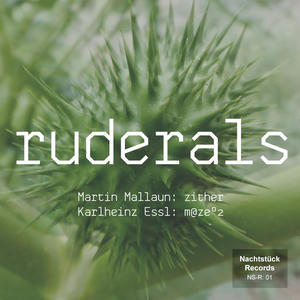
ruderals
01 Datura stramonium 10:22 02 Echium vulgare 09:29 03 Ballota nigra 08:56 04 Urtica dioica 08:23 05 Arctium lappa 10:10 06 Hyoscyamus niger 09:09 Dumps, waysides, industrial waste lands — lush vegetation issues forth everywhere in the wake of human retreat. Plants come in with the wind, with the birds, creep out of the earth itself. The emerging landscape is haphazard, rich in species, in constant flux. Spontaneous structures come and go. Planning is not necessary for this unfolding of events, the protagonists themselves determine the outcome.
ruderals [wild vegetation] is a product of the first musical encounter between two singular musicians — Karlheinz Essl, prominent spokesman of the European improvisational scene, with his self-developed computer instrument m@ze°2, and Martin Mallaun, eminent sound researcher and innovator on the zither, a traditional instrument of the Alps. Far from the well-trodden paths of computer and zither “music” they break new ground, gaining unaccustomed musical perspectives, yielding a surprisingly rich world of sounds.Info
[NS-R 01] Karlheinz Essl & Martin Mallaun - ruderals
free improvisations for zither and electronics
Nachtstück Records 2014
Recorded live at Die Bäckerei, Innsbruck (Tyrol) on May 18th, 2011
Mixed and edited by Karlheinz Essl at Studio kHz, Dec 2013
Mastered by Tiago Morais Morgado
Graphic design: mart
Liner notes: Martin Mallaun
Translation: Joan Marie Bloderer -
audio
- order
-
reviews
DER DRITTE MANN, 2014
Orson Welles’ Schatten für Kriminalklangensemble
Klangbuch mit 1 CD